Muse Spark 1.1 is Meta’s newest artificial intelligence model, released on July 9, 2026 by Meta Superintelligence Labs, and it comes with a change that matters as much as the model itself: for the first time, Meta is charging developers to use one of its models. Muse Spark 1.1 is a multimodal reasoning model built for agentic work, meaning it is designed to plan a task and carry it out across apps and tools rather than just answer a single question. It ships alongside a new paid Meta Model API, and it stays free for consumers inside the Meta AI app. This piece explains what Muse Spark 1.1 is, what is genuinely new about it, how it performs, what it costs, and why the paid API is the real headline.
The short version: Muse Spark 1.1 is Meta’s second Superintelligence Labs model and an upgrade to the original Muse Spark from April 2026. It focuses on agentic tasks, multi-agent orchestration, computer use, and coding, actively manages a 1 million token context window, and is proprietary and closed weight, unlike Meta’s open Llama family. Consumers use it free in "Thinking" mode; developers now pay per token through the Meta Model API.
What Muse Spark 1.1 is
Muse Spark 1.1 is a multimodal reasoning model, which means it takes in text, images, and audio and reasons across them, and it is tuned to act rather than only respond. It sits above the open-weight Llama line, which was Meta’s flagship before the Muse Spark models arrived, and it is the second release from Meta Superintelligence Labs, the group Meta stood up under Alexandr Wang to chase frontier-level AI.
The jump from the first Muse Spark is about doing things. Meta trained 1.1 to work as an AI agent: gathering context, forming a plan, and executing it across external apps and services. It also actively manages its context, remembering earlier actions, retrieving information from much earlier in a job, and compacting the history so the important steps survive for later work. One notable detail for developers is that Meta says it zero-shot generalizes to new native tools, Model Context Protocol servers, and custom skills, so you do not have to fine-tune it for each integration.
The real headline: Meta starts charging
The most consequential part of this launch is not a benchmark. It is that Meta is now selling access to a model. The new Meta Model API launched in public preview alongside Muse Spark 1.1, and it prices usage at $1.25 per million input tokens and $4.25 per million output tokens, with $20 in free credits before you move to pay-as-you-go. That puts the price above OpenAI’s entry-level GPT-5 mini and Anthropic’s Claude Haiku 4.5, and below Anthropic’s higher-end Claude Sonnet, according to reporting on the launch.
This is a real shift in strategy. Meta built its AI reputation on openness, giving away Llama weights for anyone to run and fine-tune. Charging per token through an API puts Meta on the same commercial footing as Anthropic and OpenAI, competing for developer spend rather than mindshare alone. The API is also OpenAI-compatible, which lowers the switching cost for teams already building against that interface.
Built for agents: multi-agent orchestration
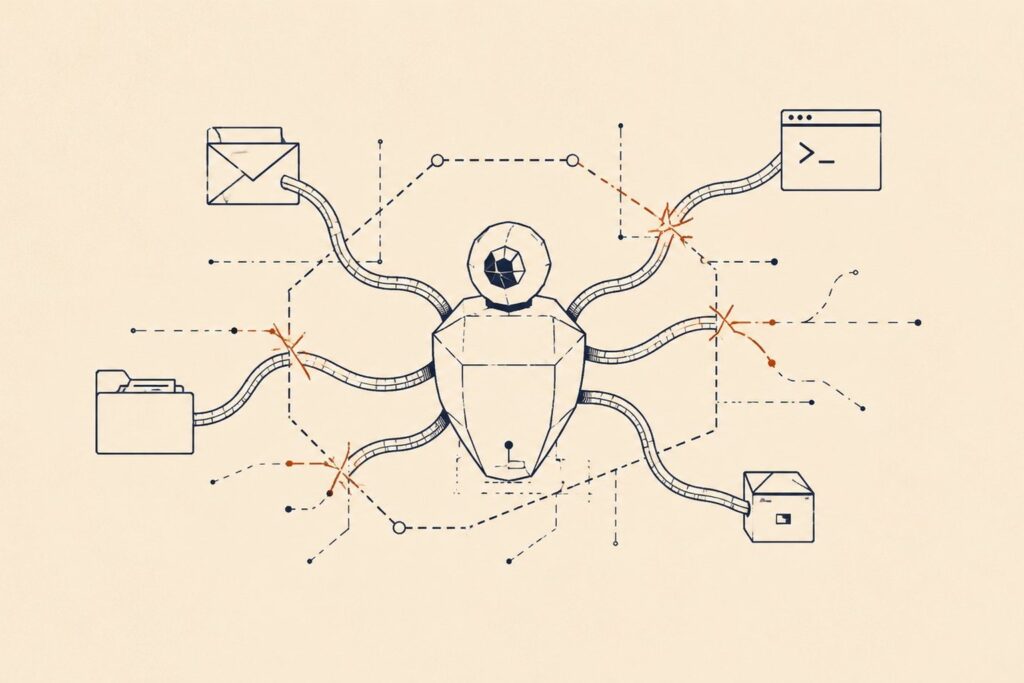
The capability Meta emphasizes most is orchestration. Muse Spark 1.1 can run as the lead agent that plans a project and delegates pieces of it to parallel subagents, or it can run as a subagent that sticks to its assigned job, uses the tools available to it, and hands control back when it hits its limits. Meta says this parallel structure is what lets it finish complex projects faster than the original Muse Spark, by reducing end-to-end latency rather than working one step at a time.
In practice, that means you could point it at a job like "pull last quarter’s support tickets, categorize them, and draft a summary," and have it split the retrieval, tagging, and drafting across subagents working at once. This is Meta productizing the multi-agent pattern that developers previously had to assemble themselves.
Computer use and coding
Two concrete skill areas got the most attention. On computer use, Muse Spark 1.1 is built to operate across several applications where the information keeps changing mid-task. Meta trained it to decide when to write a script because automation is faster, when to click through an interface directly because that is simpler, and to generate batches of actions per step instead of reasoning through every click. Meta’s demo had an agent placing a dinner order, noticing new context, and updating the order without the user stepping in.
On coding, Meta puts a lot of weight on real-world tasks: diagnosing complex bugs, adding features to enterprise systems, and running large code migrations. Muse Spark 1.1 supports the common agentic-coding features, including planning mode, subagent delegation, and context compaction, and works inside popular harnesses like OpenCode. Early partners were positive, with the CEOs of Replit and Cline praising its tool use and coding at a price that makes running real workloads viable.
Multimodal, but text out only
Muse Spark 1.1’s multimodal strength is about pairing perception with action: it can inspect an image or audio clip, hold those details across a long workflow, and use them while operating a computer for you. Meta’s example used smartphone video to pull product photos and then drove a browser to create a Facebook Marketplace listing.
One limit is worth stating plainly. The model accepts text, images, and audio as input, but its output is text only. It does not generate images or video itself. For that, Meta has a separate model, Muse Image, and a Muse Video model it says is coming later.
How it performs
The honest read on performance is that Muse Spark 1.1 is strongest exactly where Meta aimed it, agentic tool use, and weaker on the hardest long-horizon coding. Meta’s own post leans on internal evaluations that cannot be reproduced independently, so the more useful numbers come from third-party comparisons.
On scaled tool use, it leads: it tops the MCP Atlas index at around 88.1, ahead of Claude Opus 4.8 and the latest GPT models, and it also leads professional and multidisciplinary tool-use benchmarks. On agentic terminal coding it is competitive but not first, scoring around 80.0 on Terminal-Bench 2.1, just behind Opus 4.8 near 82.7 and GPT-5.5 near 83.4. On the hardest long-horizon coding, the gap is clearer: on DeepSWE it lands well behind the top Claude and GPT results. The pattern is consistent: excellent at orchestrating tools and computer use, merely good at the most demanding sustained coding, and notably token efficient throughout.
Meta also ran safety evaluations under its Advanced AI Scaling Framework and reports the model stays within safe margins across frontier-risk categories, with strong resistance to jailbreaks and prompt injection, lower hallucination, and reduced sycophancy.
Closed weight, unlike Llama
A key caveat for anyone used to Meta’s open approach: Muse Spark 1.1 is proprietary and closed weight. There is no weights download, no local deployment, and no community fine-tuning. If your workflow needs to run a model on your own hardware or customize it deeply, Muse Spark is not the fit, and the open Llama line or an open-weight alternative remains the better choice. Several independent guides also note the API is documented sparsely so far, with no detailed model card, so some specifics remain unconfirmed.
Availability and what it powers
Consumers can use Muse Spark 1.1 for free right now in "Thinking" mode inside the Meta AI app and at meta.ai, with a Meta login. Developers can build against it through the Meta Model API, in public preview for US developers. Over time, Meta is expected to use Muse Spark to replace the Llama models that currently power its assistants across WhatsApp, Instagram, Facebook, and its smart glasses, so most people will encounter it inside Meta’s products rather than through the API.
The bottom line: Muse Spark 1.1 is Meta’s most capable model yet for agentic work, strong at tool use and computer use, efficient with tokens, and free for consumers. The most important thing about it, though, is the business model. By charging developers per token through the Meta Model API, Meta has stepped onto the same commercial ground as Anthropic and OpenAI, a real departure for the company that made its name giving models away.
Frequently Asked Questions
What is Muse Spark 1.1?
Muse Spark 1.1 is Meta’s newest AI model, released July 9, 2026 by Meta Superintelligence Labs. It is a multimodal reasoning model built for agentic tasks, meaning it plans and carries out work across apps and tools, with a 1 million token context window and gains in tool use, computer use, and coding. It is the second Muse Spark model, an upgrade to the original from April 2026.
How much does Muse Spark 1.1 cost?
For consumers it is free in “Thinking” mode inside the Meta AI app and at meta.ai. For developers, the new Meta Model API charges $1.25 per million input tokens and $4.25 per million output tokens, with $20 in free credits before pay-as-you-go. This is the first time Meta has charged for access to one of its models.
Is Muse Spark 1.1 open source like Llama?
No. Muse Spark 1.1 is proprietary and closed weight, unlike Meta’s open Llama family. There is no weights download, no local deployment, and no community fine-tuning. If you need to self-host or fine-tune, Llama or an open-weight alternative is the better fit.
What is Muse Spark 1.1 good at?
It is strongest at agentic tool use and computer use, where it leads benchmarks like MCP Atlas, and it is competitive on agentic terminal coding. It is weaker on the hardest long-horizon coding tasks compared with the top Claude and GPT models. It is also notably token efficient, and it can orchestrate multiple subagents in parallel.
Can Muse Spark 1.1 generate images or video?
No. It accepts text, images, and audio as input, but its output is text only. For image generation Meta has a separate model called Muse Image, and it has said a Muse Video model is coming later.
How is Muse Spark 1.1 different from the original Muse Spark?
The upgrade centers on agentic capability. Meta reports major gains in tool use, computer use, coding, and multi-agent orchestration, plus active management of the 1 million token context window. It is also faster on complex projects because it runs parallel subagents rather than working sequentially.
Why does the paid Meta Model API matter?
Because it marks a strategic shift. Meta built its AI reputation on giving away open Llama weights. Charging per token through the Meta Model API puts Meta in the same paid-API business as Anthropic and OpenAI, competing for developer spend. The API is also OpenAI-compatible, which lowers the cost of switching to it.