The Codex Micro is OpenAI’s first piece of hardware, and it is not the AI gadget most people expected. Launched on July 15, 2026, it is a $230 light-up keyboard, more precisely a small control pad, built to steer OpenAI’s Codex coding agents. Co-designed with the specialty keyboard maker Work Louder, it gives developers a physical surface for launching, monitoring, and tuning the semi-autonomous agents that write and run code on their behalf. This piece explains what the Codex Micro is, what its buttons and dials actually do, how much it costs and who can get one, and where it fits in OpenAI’s much larger hardware ambitions.
The short version: the Codex Micro is a compact macropad with 13 mechanical switches, a joystick, a rotary dial, and a touch sensor, and its whole reason for existing is to control AI coding agents from hardware rather than from a screen. It is a limited-run collaboration aimed at Codex power users, sold while supplies last, and it is deliberately a niche object rather than a mass-market product.
What the Codex Micro is
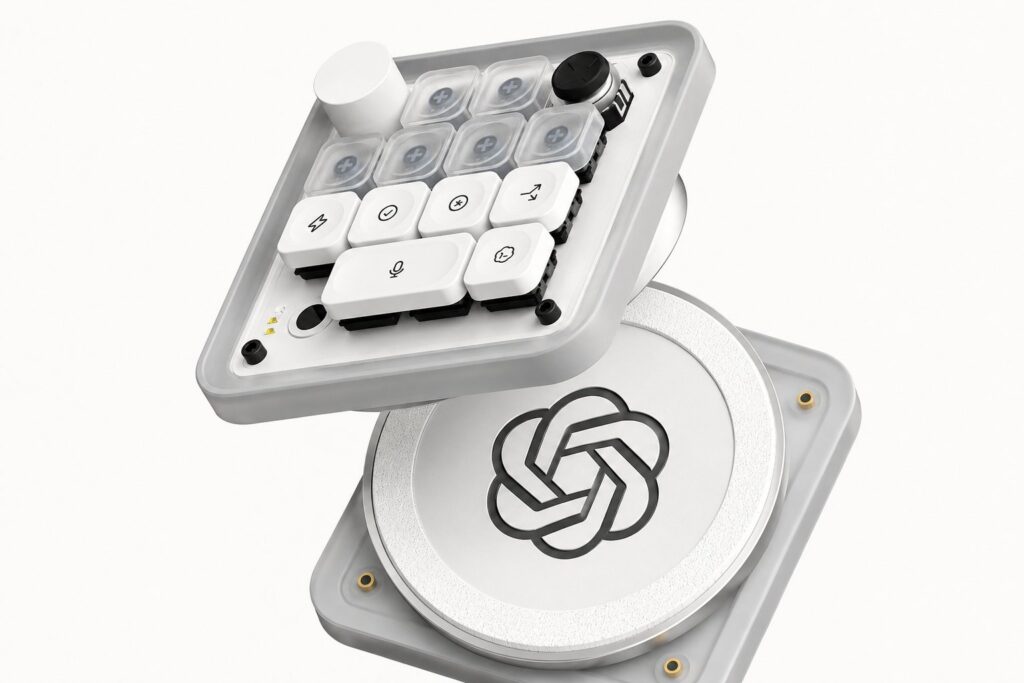
The Codex Micro is a square control pad, not a full keyboard you would type documents on. It closely resembles Work Louder’s Creator Micro 2, the compact "macropad" format that keyboard enthusiasts use for shortcuts and creative workflows. OpenAI took that form factor and reframed it around AI agents.
The idea is that if you run AI agents that work in the background, kicking off tasks, checking their status, and adjusting how hard they think are actions you repeat constantly. The Codex Micro turns those repeated actions into physical controls you can reach without leaving your flow, the same instinct that makes people buy dedicated shortcut pads for video editing or streaming.
What the buttons and dials do
The hardware maps directly to how you manage a fleet of Codex agents. There are a few distinct control types:
- Agent Keys. These light up to show the status of your agents at a glance, so you can see which are working, waiting, or done without watching a terminal.
- Command Keys. Customizable shortcut keys mapped to frequent Codex actions, so common commands become a single press.
- A joystick. Used to launch common workflows, a quick way to start a routine without typing it out.
- A reasoning dial. The most interesting control. This rotary dial adjusts how much reasoning an agent applies to a task, meaning how much time and compute it spends. Turn it up for a hard problem, down for a quick one.
- A touch sensor. An additional input surface alongside the 13 mechanical switches.
That reasoning dial is the piece that makes the Codex Micro feel purpose-built rather than a rebadged macropad. Dialing an agent’s effort up or down by feel, like a volume knob for how hard the model thinks, is a genuinely new kind of control, and it reflects how agentic coding has shifted the job from writing every line to directing work and deciding how much horsepower each task deserves.
A physical control surface for AI agents
Step back and the Codex Micro is a small statement about where AI coding is going. When one developer oversees several agents at once, the bottleneck stops being typing and becomes orchestration: starting jobs, watching status, and allocating effort. A dedicated control surface is one answer to that, and it echoes a broader move to give AI agents a physical presence, from OpenAI’s macropad to experiments like the StepX Neo agent phone. Whether hardware controls are genuinely better than on-screen ones is an open question, but the Codex Micro is a clear bet that managing agents deserves its own dedicated device.
It also pairs naturally with the way Codex already works inside OpenAI’s product line, where agents carry out multi-step tasks with limited supervision, similar in spirit to ChatGPT Work.
Price, availability, and the novelty framing
The Codex Micro costs $230 and is sold through Supply Co while supplies last. OpenAI has been candid that this is a limited-run collaboration, not a product designed for mass appeal. In its own words, the Micro is a niche device for Codex power users, available only until it sells out.
That framing matters. This is closer to a well-made enthusiast object, a collectible for people who live in Codex all day, than a device OpenAI expects most of its users to buy. Reading it as a signal of OpenAI’s mainstream hardware direction would be a mistake, because that direction is something else entirely.
Where it fits in OpenAI’s hardware plans
The Codex Micro is OpenAI’s first commercial hardware product, but it is not the hardware the company is really building toward. OpenAI has a much larger initiative underway with former Apple designer Jony Ive, and reporting from Bloomberg says a consumer device, described as a smart home speaker with ChatGPT built in, is expected to be unveiled this year for availability in 2027. The Codex Micro is separate from both of those efforts, a developer-focused side project rather than the flagship.
The launch also arrives against a tense backdrop. Apple recently sued OpenAI, alleging its leadership pursued a deliberate strategy to extract confidential information used in developing a hardware device. The Codex Micro is a niche keyboard rather than the device at the center of that dispute, but it lands while OpenAI’s broader hardware ambitions are under legal scrutiny. Those are allegations in an ongoing case, and worth noting only as context for a company making its first move into physical products.
It is a niche object for power users and a small preview of a world where directing AI agents is a hands-on job, not the mass-market OpenAI hardware still to come.
Frequently Asked Questions
What is the Codex Micro?
The Codex Micro is OpenAI’s first commercial hardware product, launched July 15, 2026. It is a $230 light-up macropad, a small control pad rather than a full keyboard, co-designed with Work Louder to give developers a physical way to launch, monitor, and tune OpenAI’s Codex AI coding agents.
How much does the Codex Micro cost and where can I buy it?
It costs $230 and is sold through Supply Co while supplies last. OpenAI describes it as a limited-run collaboration and a niche device for Codex power users, so it is available only until it sells out rather than as an ongoing mass-market product.
What do the Codex Micro’s controls do?
It has light-up Agent Keys that show agent status, customizable Command Keys mapped to frequent Codex actions, a joystick for launching common workflows, a rotary dial that adjusts how much reasoning (time and compute) an agent spends on a task, and a touch sensor, alongside 13 mechanical switches.
What is the reasoning dial?
The reasoning dial is a rotary knob that sets how much effort an agent puts into a task, essentially how much time and computing power it uses. You turn it up for harder problems and down for quick ones, like a volume knob for how hard the model thinks.
Is the Codex Micro a full keyboard?
No. It is a compact macropad or control pad, closely based on Work Louder’s Creator Micro 2, with 13 mechanical switches plus a joystick, dial, and touch sensor. It is meant to sit alongside your normal keyboard as a dedicated control surface for AI agents, not to replace it.
Is this OpenAI’s big consumer hardware device?
No. The Codex Micro is a developer-focused side project. OpenAI’s larger hardware effort, developed with Jony Ive, is reportedly a smart home speaker with ChatGPT built in, expected to be unveiled in 2026 for availability in 2027. The Codex Micro is separate from that flagship.
Why make a hardware controller for AI agents at all?
Because agentic coding shifts the developer’s job from typing code to directing multiple agents, watching their status, and deciding how much effort each task deserves. A dedicated control surface turns those repeated orchestration actions into physical buttons and dials, the same logic behind shortcut pads for video editing or streaming.