The June 12, 2026 suspension of Claude Fable 5 and Claude Mythos 5 is the first time a publicly-deployed frontier AI model in the United States has been forced offline on short notice, and for the teams that had built workloads on either model the practical question is what to do next. The companion question, the one this post focuses on, is what the situation means for architecture and procurement decisions going forward, regardless of whether your specific workload was on Fable 5 or not. The short version: model availability is no longer something builders can assume; abstraction layers that decouple application code from specific model identifiers have suddenly become much more operationally valuable; multi-vendor architectures and open-weight alternatives are getting renewed attention; and the procurement conversations that previously evaluated vendors primarily on capability, cost, and quality now include continuity-of-service as a real dimension.
This post covers what the immediate impact looks like for teams that were on Fable 5, the architectural patterns that the situation reinforces, the closed-weight versus open-weight choice as a practical engineering question, the provider abstraction libraries that reduce switching costs, what to watch over the coming weeks, and the concrete next actions for teams running production AI workloads. For the original incident coverage with the full timeline and primary-source citations, our Anthropic Disables Claude Fable 5 and Mythos 5 post covers the event itself.
What’s available, what isn’t
Anthropic’s public statement on June 12 confirmed the immediate model availability situation:
Offline for all customers: Claude Fable 5 and Claude Mythos 5. The API string claude-fable-5 now errors. Mythos 5 had been restricted to Project Glasswing partners and is offline for them as well.
Still available: Claude Opus 4.8, Claude Sonnet, Claude Haiku, and Claude Mythos Preview (the original restricted preview that predates the affected models). The rest of the Claude lineup is unaffected.
For builders, the immediate mitigation is straightforward: switch the model identifier from claude-fable-5 to claude-opus-4-8 in your API calls. As covered in our Claude Opus 4.8 pillar, Opus 4.8 was already the documented fallback target for Fable 5’s classifier-blocked queries, so any workload that had hit those fallbacks was already running on Opus.
The capability degradation is real but bounded. Opus 4.8 is a strong model for nearly every workload Fable 5 served; the workloads that benefited most from Fable’s specific capability ceiling will see meaningful but not catastrophic quality loss. For the broader Claude tier selection question, our Opus vs Sonnet vs Haiku tier selection guide covers when each tier is appropriate.
Anthropic publicly stated it is "working to restore access as soon as possible," but no timeline has been announced. As Anthropic’s statement put it, the company believes the situation "is based on a misunderstanding" and is in active conversation with the government to restore access. Until the restoration happens, the mitigation pattern above is the immediate path forward.
What teams that were on Fable 5 should do this week
Per TechCrunch’s reporting on the launch and the subsequent 9to5Mac coverage of the suspension, early Fable 5 customers had been running serious workloads: Stripe reportedly ran a codebase-wide migration on a 50-million-line Ruby codebase; Hebbia ranked Fable 5 highest on its core analytics benchmark; Mozilla used Mythos 5 (the same underlying model class) for security research that resolved hundreds of vulnerabilities. These workloads are now disrupted.
For teams in similar positions, the immediate triage:
Switch the model identifier. Replace claude-fable-5 with claude-opus-4-8 in your application code. For most workloads this is a one-line change and the application keeps working with a meaningful but bounded capability degradation.
Update any documented dependencies. SDK configurations, environment variables, infrastructure-as-code, runbooks, and team documentation that reference Fable 5 specifically need to be updated. Comprehensive documentation makes the eventual restoration (or further pivot) easier.
Test the fallback behavior. Opus 4.8 isn’t drop-in identical to Fable 5; specific tests, evaluations, or quality benchmarks may behave differently. Run your existing test suite against Opus 4.8 to surface differences before they show up in production.
Document the regression for workloads where capability matters. Some workloads (long-horizon coding tasks, complex analytical work) will produce meaningfully worse outputs on Opus 4.8 than they did on Fable 5. Document the specific cases so you can either redesign the workload, set user expectations, or prioritize the restoration discussion if Fable 5 returns.
Consider whether the workload should move. For some workloads, the right response isn’t waiting for Fable 5 to return but evaluating whether the workload should move to a different vendor’s frontier model (GPT-5.5, Gemini 3 Pro, others) or to a self-hostable alternative. The right answer depends on the workload’s specific capability requirements and operational constraints.
For most teams, the triage is recoverable. The harder question is what the situation means for architecture decisions going forward.
What this means architecturally
The pattern that the Fable 5 suspension surfaces isn’t specific to Anthropic or to Claude. It’s a more general operational reality: commercial frontier model availability is something builders should architect for, not assume. Several architectural implications follow from this:
Hard-coded model identifiers are now demonstrably fragile. Code that references claude-fable-5 directly broke when the suspension hit. Any production code that hard-codes a specific model identifier carries similar fragility for the specific model it depends on. The pattern that previously felt acceptable (pick a model, write code against its identifier, ship) is harder to justify when "the model can become unavailable on short notice" is a documented possibility.
Provider abstraction libraries become meaningfully more valuable. The Vercel AI SDK provides a unified interface across OpenAI, Anthropic, Google, Cohere, Mistral, and many other providers. The same generateText() or streamText() call works with any supported provider; switching providers becomes a configuration change rather than a code rewrite. LangChain provides analogous abstractions for Python workloads. For teams that hadn’t yet adopted these abstractions, the Fable 5 situation is a strong argument for doing so.
Multi-vendor architectures reduce continuity risk. Workloads that can fall back from one vendor’s model to another’s (Anthropic to OpenAI, OpenAI to Google, primary to secondary, primary to open-source) are less exposed to single-vendor availability disruption than workloads locked to a specific vendor. The cost of building this fallback capability (typically modest with provider abstraction libraries in place) is now easier to justify against the continuity benefit.
Workload-portability documentation matters more. Knowing how your workload behaves on different providers (Anthropic Opus vs OpenAI GPT-5.5 vs Google Gemini vs open-source Llama 4) is now operationally valuable rather than just academically interesting. Teams that have benchmarked their workloads across multiple providers can pivot faster than teams that have only validated on one.
These patterns aren’t new; the Fable 5 situation just made them more obviously operationally important.
The closed-weight versus open-weight question
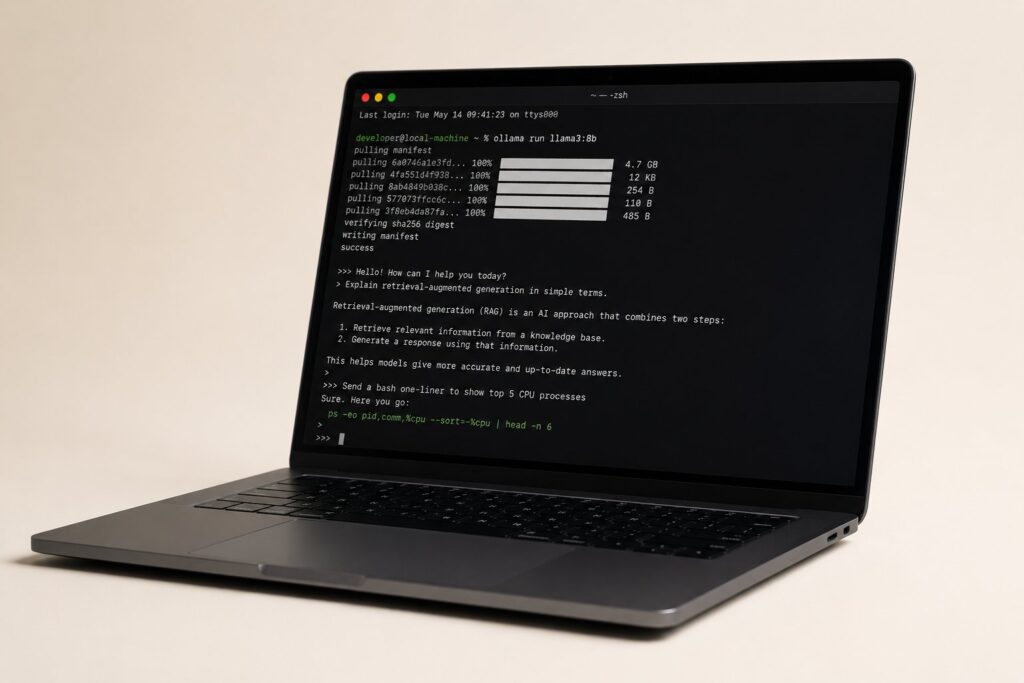
A specific architectural question the situation has reframed: should production workloads run on closed-weight commercial models (Claude, GPT, Gemini) or on open-weight alternatives (Llama, Mistral, DeepSeek, Qwen) that the customer can host themselves?
The historical tradeoff was straightforward. Closed-weight commercial models have provided meaningfully higher peak capability, simpler operational story (the vendor runs the inference infrastructure), and better managed safety properties. Open-weight models have provided lower per-inference cost at scale, full sovereignty over the deployment, no vendor lock-in, and no risk of the vendor changing terms or pricing.
The Fable 5 situation adds an explicit availability dimension to the tradeoff. As Snyk’s analysis of the takedown put it from a security and business-continuity perspective, "when a government pulls an AI model" the closed-weight workload is at the mercy of decisions made elsewhere; the self-hosted open-weight workload isn’t. For workloads where availability continuity is operationally important (regulated industries, government customers, business-critical applications), the open-weight option has gotten substantially more attractive than it was a week ago.
The open-weight landscape has matured substantially through 2024-2026. Llama 4 (Meta), Mistral Large, DeepSeek V4, and Qwen 3 have each closed meaningful capability gaps with the closed-weight frontier through this period. For many production workloads the open-weight options are now genuinely competitive on quality, particularly for the workload patterns that don’t need the absolute peak frontier capability.
The right answer for any specific team depends on the workload’s actual capability requirements, the team’s operational capability for running inference infrastructure, the security and compliance posture the workload needs, and the importance of availability continuity to the workload. The honest framing: closed-weight commercial models remain the right choice for many workloads, but the "obviously the right choice" default has weakened. Open-weight alternatives now warrant explicit evaluation rather than dismissal.
For broader context on the AI agent landscape that uses these models, our AI agents pillar covers the application patterns where the model choice has the most operational impact.
What this means for procurement
For enterprise customers and engineering leaders evaluating AI vendors, the procurement conversation has shifted in specific ways:
Service-level expectations now include availability continuity. Vendor contracts that didn’t contemplate forced takedown should be evaluated for whether the takedown scenario is appropriately handled. SLA terms, refund mechanisms, and continuity guarantees may need to be revisited at the next contract renewal.
Multi-vendor commitments hedge availability risk. Single-vendor commitments concentrate risk; multi-vendor architectures spread it. The cost of supporting multiple vendors (typically modest with abstraction libraries in place) is now easier to justify in procurement conversations.
Open-weight alternatives belong in the evaluation set. Even for organizations that ultimately choose closed-weight commercial vendors, evaluating the open-weight alternatives as part of procurement makes the eventual choice more defensible and surfaces the operational tradeoffs explicitly.
The model identifier dependency pattern is a question to ask vendors. Does the vendor commit to maintaining the specific model identifier for a documented period? What happens if a specific model is removed? What’s the migration path? These questions weren’t typically part of AI vendor procurement a week ago; they’re appropriate questions now.
The procurement shift isn’t dramatic. Most teams will continue to use the closed-weight commercial vendors that have served them well. The change is that the secondary considerations (availability continuity, abstraction, multi-vendor support) have moved from "nice to have" to "should be addressed deliberately."
What to watch
Several specific developments worth tracking over the coming weeks:
- Whether Anthropic restores access to Fable 5. The company committed publicly to working toward restoration; the terms and timeline of any restoration will define what compliance with the current operational environment actually looks like going forward.
- Whether other frontier model releases face similar action. The Fable 5 suspension is the first of its kind; whether it remains isolated or whether similar actions reach other vendors’ frontier releases will shape how broadly the architectural implications apply.
- Customer migration patterns. Whether enterprise customers actually adopt multi-vendor architectures, whether builders actually shift to provider abstraction libraries, whether the open-weight ecosystem captures meaningful migration: these are the empirical signals that will reveal whether the predicted operational implications materialize at scale.
- Capability evolution in the alternatives. Opus 4.8 is the immediate Fable 5 fallback; how Anthropic, OpenAI, Google, and the open-weight community continue developing frontier capability through the rest of 2026 will affect the calculus for teams reconsidering their model choices.
- Provider abstraction library adoption. The Vercel AI SDK, LangChain, and similar tools were already broadly adopted; whether the Fable 5 situation accelerates that adoption among teams that hadn’t yet committed will be visible in the libraries’ usage statistics and community activity over the coming months.
Six concrete actions for builders
For teams running production AI workloads, the concrete actions worth taking this week:
- Audit which workloads depend on specific model identifiers. Code that hard-codes any specific model identifier is exposed to the same fragility pattern the Fable 5 customers faced. Document the dependencies.
- Evaluate provider abstraction libraries if you haven’t already. The Vercel AI SDK for TypeScript, LangChain for Python, or analogous tools for your stack make provider swaps configuration changes rather than code rewrites.
- Build at least one alternative-provider fallback for your most important workloads. Even if you don’t activate it routinely, having the fallback validated and ready reduces switching cost when it’s actually needed.
- Benchmark your workloads on multiple providers. Knowing how your specific workload behaves on Anthropic Opus, OpenAI GPT-5.5, Google Gemini, and at least one open-weight alternative makes pivot decisions faster and more informed when they’re needed.
- Evaluate self-hostable open-weight alternatives for the workloads where availability continuity matters most. Even if you don’t move to open-weight, understanding what’s possible with Llama 4, Mistral Large, DeepSeek V4, and Qwen 3 informs the broader procurement conversation.
- Document a vendor-failure runbook. What’s your team’s response if a primary vendor’s model becomes unavailable? Having an explicit runbook with the migration steps, fallback configurations, and decision criteria documented before the next incident is operationally valuable.
The deeper takeaway is that the Fable 5 suspension didn’t introduce new architectural patterns so much as it made the existing best-practice patterns operationally important rather than nice-to-have. Provider abstraction libraries, multi-vendor architectures, open-weight alternatives, and explicit availability planning were all reasonable choices a week ago; they’re meaningfully more important choices now. Teams that had already invested in these patterns are in a better position than teams that hadn’t, and the gap is likely to widen rather than narrow over time.
Frequently Asked Questions
What happened to Claude Fable 5?
On June 12, 2026, Anthropic disabled access to Claude Fable 5 and Claude Mythos 5 for all customers following a US government export-control directive. The API string `claude-fable-5` now errors. All other Claude models including Opus 4.8, Sonnet, and Haiku remain available. Anthropic has stated it believes the situation is based on a misunderstanding and is working to restore access; no restoration timeline has been announced. For the full incident timeline and primary-source citations, see our original suspension coverage.
What should I do if my code uses Claude Fable 5?
The immediate mitigation is to change the model identifier in your API calls from `claude-fable-5` to `claude-opus-4-8`. Opus 4.8 is the documented fallback target that Fable 5 already routed to for classifier-blocked queries, so any workload that hit those fallbacks was already running on Opus. Expect meaningful but bounded capability degradation for workloads that specifically benefited from Fable’s Mythos-class capability ceiling. Update any documentation, environment variables, infrastructure-as-code, and runbooks that reference Fable 5 specifically. Test your existing evaluation suite against Opus 4.8 to surface specific behavioral differences before they appear in production.
Will Claude Fable 5 come back?
Anthropic publicly committed to working toward restoration. The company stated it believes the situation is based on a misunderstanding and is in active conversation with the government. No specific restoration timeline has been announced as of this writing. Teams should plan for the possibility that Fable 5 returns on negotiated terms (which may include foreign-national access restrictions or capability adjustments) and the possibility that it doesn’t return on a useful timeline. Continuity planning should not depend on imminent restoration.
What architectural patterns does this situation reinforce?
Provider abstraction libraries (Vercel AI SDK, LangChain, similar tools) become more valuable because they reduce switching cost when a specific model becomes unavailable. Multi-vendor architectures that can fall back from one vendor’s model to another’s reduce single-vendor concentration risk. Open-weight self-hostable alternatives become differentially attractive for workloads where availability continuity is operationally important. Workload portability documentation, benchmarking across providers, and explicit vendor-failure runbooks all move from nice-to-have to operationally important.
Should I move from closed-weight to open-weight models?
The right answer depends on your workload’s specific capability requirements, your team’s operational capability for running inference infrastructure, the security and compliance posture the workload needs, and how important availability continuity is to the workload. Closed-weight commercial models still provide higher peak capability, simpler operational story, and better managed safety properties for many workloads. Open-weight alternatives like Llama 4, Mistral Large, DeepSeek V4, and Qwen 3 have closed meaningful capability gaps through 2024-2026 and now warrant explicit evaluation rather than dismissal. For workloads where availability continuity matters most, the open-weight option is meaningfully more attractive than it was a week ago.
What is a provider abstraction library?
A provider abstraction library is a TypeScript or Python library that exposes a common interface across multiple AI vendors, letting application code call any supported vendor’s model through the same function. The Vercel AI SDK for TypeScript and LangChain for Python are the most widely adopted examples. With abstraction in place, switching from `claude-fable-5` to `claude-opus-4-8` to `gpt-5.5` to `gemini-3-pro` becomes a configuration change rather than a code rewrite. The pattern has been a best practice for some time; the Fable 5 situation makes it operationally important.
Are other vendors’ models also at risk?
The Fable 5 suspension is the first of its kind in the United States. Whether similar actions will reach other vendors’ frontier releases is uncertain. The architectural advice in this post (provider abstraction, multi-vendor fallback, workload portability) is the same regardless of which specific vendor’s model your workload depends on. The pattern reduces single-vendor concentration risk in the general sense, not just risk specific to Claude. Teams that hadn’t previously prioritized these patterns may want to do so regardless of which vendor they primarily use.
How does this affect my procurement decisions?
Several practical adjustments. Service-level expectations now include availability continuity; review contract terms for whether forced-takedown scenarios are handled. Multi-vendor commitments hedge availability risk; the cost of supporting multiple vendors is easier to justify. Open-weight alternatives belong in the evaluation set even for organizations that ultimately choose closed-weight commercial vendors. Specific questions to ask vendors about model identifier maintenance, removal scenarios, and migration paths are now appropriate parts of procurement. The procurement shift isn’t dramatic but the secondary considerations have moved from nice-to-have to should-be-addressed-deliberately.