Muse Glimmer is a 30-billion-parameter open-weight model Meta released on August 10, 2026, under the Apache 2.0 license. It is built for agentic work, it accepts images as well as text, and a quantized build fits in 24 GB of video memory, which means it runs on a single consumer graphics card or a well-specified Mac.
The license is the part that deserves attention, and the benchmark table Meta published alongside it is more interesting than the announcement. Meta compared Muse Glimmer against two open-weight rivals and lost roughly nine of twenty-one rows to one of them. Which rows it lost turns out to be useful information.
What Meta actually released
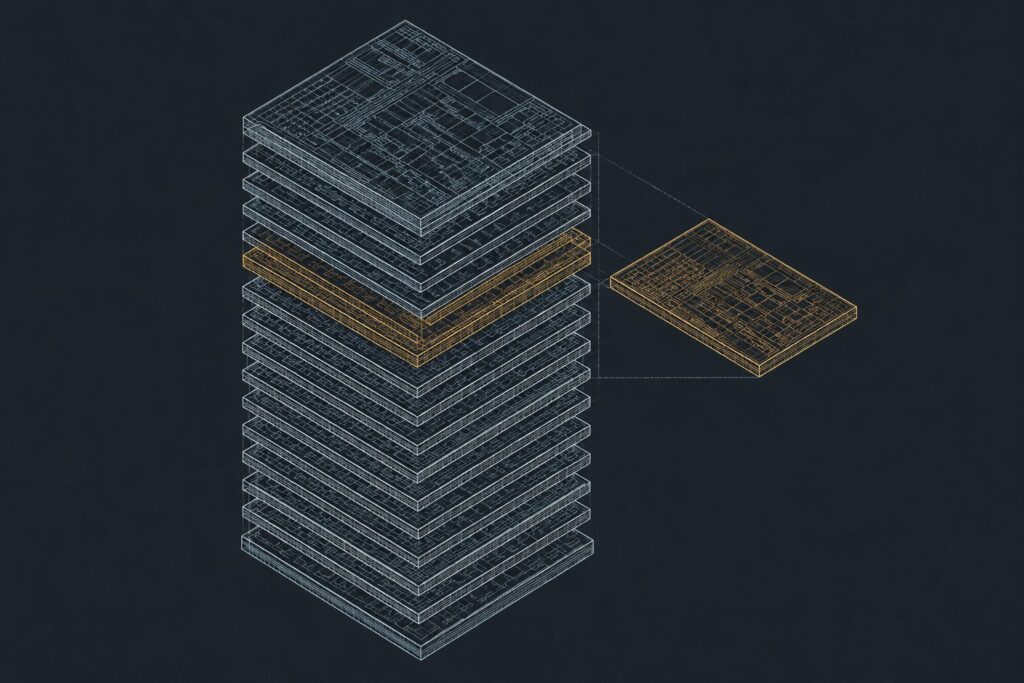
The announcement from Meta AI Research describes a dense causal transformer paired with a perception encoder. The model card puts it at roughly 29.6 billion parameters total, of which about 1.8 billion are a ViT-G/14 vision encoder, with 52 layers, a hidden dimension of 6,656, grouped-query attention at a 16:1 ratio, SwiGLU feed-forward blocks, and rotary position encoding. Attention alternates three local layers to one global layer with a 2,048-token sliding window. The context window is listed at 131,072 tokens and above.
Two words in the announcement carry specific meaning. "Agentic" here means long-horizon execution, precise tool calling, and end-to-end task completion with recovery when a step fails, rather than single-turn question answering. "Multimodal" means interleaved text and images through the perception encoder, so the model can read a screenshot, a chart, or a document inside a conversation. Meta also ships a lightweight drafter model based on DFlash for speculative decoding. That is a throughput optimization rather than a capability: a small model guesses several tokens ahead and the large model verifies them in one pass, so you get more tokens per second without changing what the model can do. For an agent making many short tool calls in sequence, that latency saving compounds across a long task, which is presumably why Meta bothered to ship it.
If the category is unfamiliar, our explainer on what a frontier model is covers the tier above this one, and what AI agents are covers the workload Muse Glimmer is tuned for.
Apache 2.0 is the real headline
Meta’s open releases have historically shipped under the Llama Community License, a custom document with acceptable-use terms and a monthly-active-user threshold above which you needed a separate agreement. It was widely described as open source. It was not, in the sense the term is normally used, because it was never OSI approved and it discriminated between users by size.
Muse Glimmer is Apache 2.0. That is a genuine permissive license: use it commercially, modify it, redistribute it, build a product on it, no revenue threshold and no field-of-use restriction. VentureBeat framed the release as Meta returning to open source, and on the license terms alone that is a fair description of what changed. For a company evaluating whether it can put an open-weight model into a product without legal review of a bespoke license, that difference is larger than any benchmark on the page. Our piece on open versus closed AI models covers why the license terms usually matter more than the weights being downloadable at all.
The contrast is sharp against the other open-weight releases of the past month. Most Chinese lab licenses are community licenses with revenue caps, attribution requirements, or territorial exclusions attached. Apache 2.0 has none of that.
What "runs on your device" means in practice
Meta’s claim is that Muse Glimmer runs on a Mac or PC with a single consumer GPU. The model card is more precise, and the precision matters if you are budgeting hardware.
| Build | VRAM needed | Realistic hardware |
|---|---|---|
| Full precision | 64 GB | Data center card or multi-GPU |
| K-Quant-Dynamic | 32 GB | High-end workstation card |
| K-Quant-17GB | 24 GB | Single consumer GPU, roughly 4-bit |
So "runs on one GPU" is true at roughly 4-bit quantization, in a build whose weights come in under 20 GB. That is a real capability and not a marketing stretch, but it is the quantized model doing it, not the one the benchmarks were run on. Anyone comparing published scores against what they will experience on a 24 GB card should expect some gap.
Meta’s own developer page describes it as "An open 30B model for always-on local agents," which is a more honest positioning than most local-model marketing. Always-on is the point. A model you can leave running on a workstation, that answers in the same building as your data, is a different product from one you rent by the token, even when the rented one scores higher.
Where Muse Glimmer wins
Meta benchmarked against Gemma4-31B and Qwen3.6-27B, the two closest open-weight models by size. Against Gemma4 it wins almost everywhere. Against Qwen3.6 it splits, and the split is not random.
The wins cluster tightly in tool use and search. On MCP Atlas it scores 75.5 against Qwen’s 62.5 and Gemma’s 54.2, a wide margin on the benchmark most directly about calling tools through the Model Context Protocol. DeepSearch QA is 74.6 against 71.1 and 61.7. On the τ3-Banking agentic task it posts 23.5 against 16.7 and 15.1, and WildClawBench 47.6 against 43.2 and 37.6. It also leads on instruction following (IFBench 77.0), long-context retrieval (AA-LCR 80.0 against 73.3), and competition math (AIME 2026 at 94.7).
That is a coherent profile. If your workload is an agent that calls tools, searches, and follows a long instruction faithfully, this is the strongest of the three.
Where it loses, according to Meta’s own table
Nine of the twenty-one rows go to Qwen3.6-27B, and they cluster just as tightly.
Computer use and terminal work is where the gap opens. OSWorld-Verified is 65.9 against Qwen’s 75.6, nearly ten points. TerminalBench 2.1 is 51.7 against 60.7, nine points. GDPVal-AA v2 is 953 against 1,141. SWE-Bench Verified is 76.0 against 77.2, and SkillsBench 44.3 against 46.6. On multimodal work the losses are narrow but consistent: ScreenSpot Pro 75.4 against 76.1, OmniDocBench 75.8 against 77.8, MMMU Pro 74 against 75. GPQA Diamond goes to Gemma4 at 85.7 against Muse Glimmer’s 83.5.
Publishing a table you lose a third of is unusual and worth crediting. Most vendor benchmark pages are curated to the point of uselessness, and the honest version is more actionable than a clean sweep would have been.
One caveat on the whole table. Every number here was produced by Meta, on the full-precision model, against two competitors it selected. None of it is independently replicated, and the two rivals are both roughly the same size, which flatters a comparison that excludes anything larger. Treat the shape of the result as the signal, not the decimal places.
How it fits with Muse Code and Muse Spark
Meta now has three Muse products doing different things, and the naming does not help. Muse Code is the terminal coding agent that launched in beta on August 5 and competes on price rather than capability. Muse Spark is the consumer-facing creative product. Muse Glimmer is neither: it is a set of weights you download and run yourself.
That is worth holding onto, because the benchmark result above bears directly on Muse Code. Meta’s own table puts Muse Glimmer behind Qwen3.6-27B on TerminalBench and SWE-Bench Verified, which is exactly the workload a terminal coding agent lives in. The two releases point in different directions, and only one of them is free.
Who should actually run it
Muse Glimmer is a strong choice if you are building a tool-calling agent, want the weights on your own hardware for data-residency or cost reasons, and need a license your lawyers will approve without a call. Apache 2.0 plus 24 GB of VRAM is a genuinely low bar for a capable agentic model.
It is the wrong choice in three cases. If your agent drives a desktop or lives in a terminal, the published numbers favor Qwen3.6-27B and you should test both before committing. If you need the benchmarked quality specifically, budget for 64 GB rather than assuming the 4-bit build matches. And if you are not going to self-host, running a 30B model yourself is rarely cheaper than renting a better one, so the license advantage only pays off if you actually wanted the weights.
The practical move is to download the K-Quant-17GB build, run your own tool-calling evaluation against whatever you use today, and treat Meta’s table as a hypothesis rather than a result.
Frequently Asked Questions
What is Muse Glimmer?
Muse Glimmer is an open-weight AI model Meta released on August 10, 2026. It has roughly 29.6 billion parameters, accepts text and images, is built for agentic tasks like tool calling and multi-step execution, and ships under the Apache 2.0 license.
What license is Muse Glimmer under?
Apache 2.0. That is a standard permissive open-source license with no revenue threshold, no user-count trigger, and no field-of-use restriction. It is a departure from the custom Llama Community License Meta used for previous open releases.
What hardware do I need to run Muse Glimmer?
The model card lists three builds: full precision needs 64 GB of VRAM, K-Quant-Dynamic needs 32 GB, and K-Quant-17GB needs 24 GB. The 24 GB build is roughly 4-bit and is the one that fits a single consumer GPU or a well-specified Mac.
What is its context window?
The model card lists 131,072 tokens and above. Attention alternates three local layers to one global layer with a 2,048-token sliding window, which is how it keeps long-context cost manageable at this size.
Is Muse Glimmer better than Qwen3.6-27B?
It depends on the task, and Meta’s own published table says so. Muse Glimmer leads on tool calling, search, instruction following, and math. Qwen3.6-27B leads on computer use, terminal work, and most multimodal rows. Across twenty-one benchmarks the split is roughly twelve to nine in Muse Glimmer’s favor.
How is Muse Glimmer different from Muse Code?
Muse Code is a terminal coding agent you use as a product. Muse Glimmer is a model you download and run. They share a brand and nothing else. Notably, Meta’s own benchmarks put Muse Glimmer behind Qwen3.6-27B on the terminal and software engineering tasks Muse Code is built around.
Can I use Muse Glimmer commercially?
Yes. Apache 2.0 permits commercial use, modification, and redistribution without a revenue threshold or a separate agreement, which is the main practical difference from the community licenses attached to most other recent open-weight releases.
Where do I download it?
The weights are published on Hugging Face under the meta-models organization as Muse-Glimmer-30B, with the quantized builds available alongside the full-precision version.