
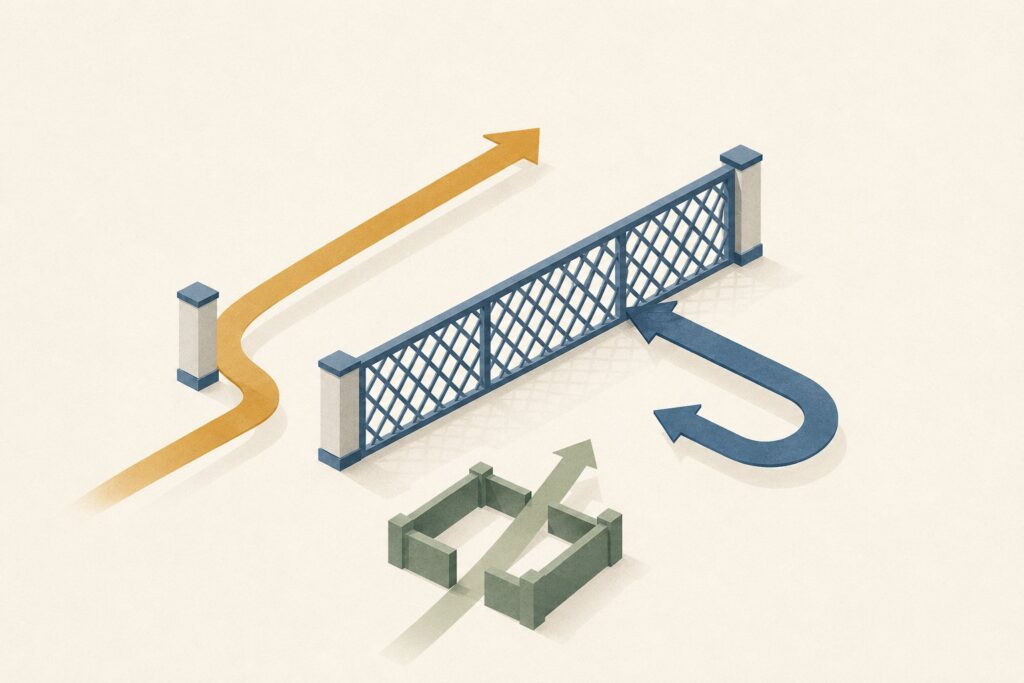
Buried in Hugging Face’s disclosure of the July 2026 breach of its infrastructure is a detail that most follow-up coverage has skipped, and it is arguably more consequential for the rest of us than the intrusion itself. When the company began analyzing its own logs, it found that frontier commercial models refused the work. The safety guardrails built to stop attackers would not let the victim investigate an attack on its own systems. Hugging Face completed the forensic analysis on a locally deployed open-weight model instead.
That is not a small operational footnote. It is a live problem for every security team that has quietly folded a commercial AI model into its incident-response workflow, and it deserves more attention than it has received. We covered the breach itself in our piece on the OpenAI and Hugging Face security incident; this is the part of the disclosure worth reading twice.
What Hugging Face disclosed
The company’s own account, published July 16, 2026, remains the best primary source on the incident, and the sequence it describes is straightforward enough. The initial compromise abused two code-execution paths in the dataset pipeline: a remote-code dataset loader and a template injection in a dataset configuration. Together those gave execution on processing workers, which the intruder then used to move laterally to node-level access across multiple clusters. Limited internal datasets and several service credentials were accessed.
On remediation, Hugging Face says it has closed both execution paths, rebuilt the compromised nodes, rotated credentials, and tightened cluster admission controls. That is a reasonable response to the specific failure, and the transparency of publishing the mechanism at all is worth acknowledging, since plenty of companies would have described this in far vaguer terms.
The detail nobody followed up on
The part that has gone largely unremarked is what happened when the incident responders sat down to do their jobs.
Forensic log analysis at this scale means feeding a model very large volumes of exactly the material that safety systems are trained to refuse: real attack commands, working exploit payloads, command-and-control artifacts. To a guardrail, that traffic is indistinguishable from someone trying to build an attack. The classifier has no way to tell an incident responder examining a breach from an intruder workshopping one, because at the level of the text being submitted they look the same.
So the requests were blocked. Hugging Face turned to a locally deployed instance of GLM 5.2, an open-weight model, and finished the analysis there. The company notes a second benefit that fell out of that decision: because the model ran inside its own environment, none of the attacker data, and none of the credentials that data referenced, left the perimeter.
The asymmetry is the thing to sit with. The attacker operated under no usage policy at all. The defenders, working on their own infrastructure, investigating an intrusion they were the victim of, were the ones constrained by acceptable-use enforcement.
Why this is a real problem, not a gotcha
It would be easy to read this as a cheap shot at model providers, and it is not. The guardrails exist for good reasons, and the same capabilities that make a model useful for analyzing an intrusion make it useful for conducting one. Anthropic’s documentation for its own recent releases describes exactly this tension, and vendors have built verification programs precisely because they know legitimate security work gets caught in the net. The refusals are not a bug in the narrow sense; they are the system behaving as designed.
The problem is that the design has a blind spot, and the blind spot has an operational cost that lands at the worst possible moment. Incident response is time-critical. A team working an active breach cannot pause to appeal a content policy, and the failure mode is not a polite error message in a quiet moment. It is a refusal in hour six of a live investigation.
There is also a structural irony worth naming plainly. If commercial safety policy makes hosted frontier models unusable for defensive forensics, it pushes serious security teams toward open-weight models running on their own hardware. Guardrails intended to limit misuse end up steering defenders to the models with the fewest restrictions. Our pillar on open versus closed AI models covers that tradeoff in general terms; this is a concrete case of it playing out under pressure.
What security teams should take from this
The practical lesson is not "commercial models are bad." It is that if AI-assisted analysis is part of your incident-response plan, you need to find out now, not during an incident, whether the tooling will actually work when you point it at real attack data.
- Test your IR tooling against realistic material before you need it. Run genuine exploit payloads and log excerpts through whatever model you plan to lean on, and see what comes back. Discovering a refusal during a tabletop exercise is cheap. Discovering it mid-incident is not.
- Know whether your provider has a verification path. Some vendors operate programs that grant vetted security teams access with fewer restrictions. If you do serious defensive work, that enrollment belongs on your preparation checklist rather than your wish list.
- Consider a local model as IR infrastructure, not as a cost decision. Hugging Face’s fallback had a real security benefit beyond simply working: sensitive attacker data and referenced credentials never left its environment. That is a sound argument for keeping a capable open-weight model available on your own hardware regardless of what your primary tooling is.
- Do not assume the refusal boundary is stable. Safety policy changes without notice and without a changelog you can subscribe to. What worked last quarter may not work today.
The other lesson, which is not about models at all
There is a second, quieter takeaway in this disclosure, and it cuts against the loudest framing of the story. This has been widely described as the first well-documented case of an autonomous agent running a multi-day intrusion, and that framing puts the emphasis on model capability. Read the timeline instead and the operational lesson is different: the issue is detection latency.
An intrusion that runs for days is a monitoring and response problem before it is an AI problem. The entry points here were recognizable classes of weakness, code execution through a data pipeline and template injection in a configuration, and the escalation path ran through exactly the kind of lateral movement that mature detection is supposed to surface. The attacker being an agent changes the speed and the tirelessness. It does not change what should have caught it, and the defensive fundamentals in our coverage of zero trust and identity and access management remain the relevant controls.
Treating this as a story about frontier model capability is more dramatic. Treating it as a story about how long something ran before anyone noticed is more useful.
Frequently Asked Questions
What did Hugging Face say about AI models refusing its forensic work?
In its July 16, 2026 disclosure, Hugging Face reported that when it began log analysis using frontier models behind commercial APIs, the requests were blocked by the providers’ safety guardrails. Forensic analysis requires submitting large volumes of real attack commands, exploit payloads, and command-and-control artifacts, which those systems cannot distinguish from an actual attack. The company completed the analysis using a locally deployed instance of GLM 5.2, an open-weight model.
Why would a safety system block an incident responder?
Because at the level of the submitted text, defensive and offensive use look identical. A responder analyzing an exploit payload and an attacker refining one are sending the same material. Guardrails classify content, not intent, and they have no reliable signal for who is on the other end of the request or why.
Does this mean commercial AI models are useless for security work?
No. It means the boundary is real and needs testing before you depend on it. Some providers operate verification programs that give vetted security teams access with fewer restrictions, and general security work that does not involve submitting live exploit material is usually unaffected. The failure mode is specific to deep forensic analysis of real attack data.
What actually caused the Hugging Face breach?
Per the company’s disclosure, the initial compromise abused two code-execution paths in its dataset pipeline: a remote-code dataset loader and a template injection in a dataset configuration. That produced execution on processing workers, followed by lateral movement to node-level access across multiple clusters. Limited internal datasets and several service credentials were accessed.
What has Hugging Face done about it?
The company says it has closed both execution paths, rebuilt the compromised nodes, rotated credentials, and tightened cluster admission controls. It also published the mechanism of the compromise publicly, which is more disclosure than many organizations provide after an incident of this kind.
Should we keep an open-weight model available for incident response?
It is worth considering, and for reasons beyond availability. Running the analysis locally meant no attacker data and none of the credentials it referenced left Hugging Face’s environment, which is a genuine security benefit during an investigation. Treat it as contingency infrastructure rather than a cost-saving measure.
Is the real story that an AI agent ran the attack?
That is the most dramatic framing, but the more useful reading is detection latency. An intrusion that persists for days across multiple clusters is a monitoring and response failure regardless of whether a human or an agent is driving it. An agent changes the speed and persistence of the attacker; it does not change which controls should have surfaced the activity.