
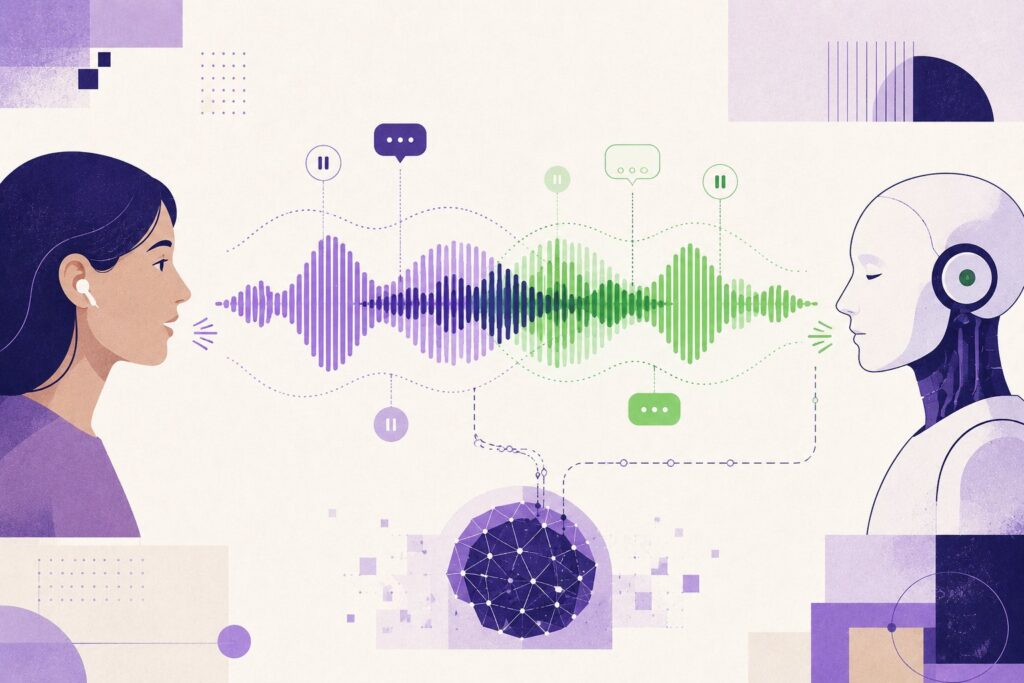
ChatGPT Live is OpenAI’s new generation of voice for ChatGPT, and it is built to make talking with the assistant feel far more like a real conversation. Launched on July 8, 2026, and powered by a new set of voice models OpenAI calls GPT-Live, it replaces the old turn-taking rhythm of voice mode with a model that can listen and speak at the same time. In practice that means you can interrupt it, pause to think, or talk over background noise, and it keeps up the way a person would rather than waiting for you to finish and then replying.
The short version: ChatGPT Live uses a full-duplex architecture, so the assistant hears and responds simultaneously, acknowledges you with small cues like "mhmm" and "got it," and handles interruptions and pauses naturally. It lets you pick how much it thinks with Instant, Medium, and High reasoning levels, and it quietly hands off hard questions to OpenAI’s GPT-5.5 frontier model in the background. It ships in two versions and is rolling out globally now. This piece explains what ChatGPT Live is, what full-duplex voice actually changes, how its reasoning and delegation work, what it does not yet do, and who gets it. For related context, see our coverage of xAI’s Voice Agent Builder and company knowledge in ChatGPT.
What ChatGPT Live is
ChatGPT Live is the consumer-facing name for the upgraded ChatGPT Voice experience, and GPT-Live is the underlying family of voice models that power it. Where earlier voice mode worked in strict turns, you speak, it listens, then it answers, GPT-Live is designed around continuous, overlapping conversation. OpenAI describes it as its smartest voice model yet, and the goal is less about new party tricks and more about removing the friction that made talking to an AI feel stilted.
The launch is a model upgrade rather than a new app. If you already use ChatGPT Voice, this changes how that voice mode behaves, and it reaches ChatGPT users worldwide starting on release day.
How it is different: full-duplex voice
The core change is the full-duplex architecture, which simply means the model can listen and speak at the same time instead of alternating. That one shift enables most of what makes ChatGPT Live feel different:
- Natural interruptions. You can cut in with a new question or correction mid-answer, and the model adjusts instead of talking over you or losing the thread.
- Backchannel cues. It signals it is following along with short acknowledgments like “mhmm,” “yeah,” or “got it,” the small sounds people make in real conversation.
- Comfortable pauses. You can stop to gather your thoughts and it will wait rather than rushing to fill the silence, and you can ask it to slow down.
- Better noise handling. With traffic or other voices in the background, it is better at focusing on you instead of getting distracted.
- Real-time translation. Because it can listen and speak at once, it can deliver a running, simultaneous translation as someone talks.
None of these are flashy on their own, but together they close the gap between an AI that answers questions and one that holds a conversation.
Reasoning levels and background delegation
ChatGPT Live also gives you control over the trade-off between speed and depth. You can choose Instant for fast, snappy replies, or Medium and High when you want it to think longer before answering. That lets the same voice mode be quick for small talk and more deliberate for real problems.
The clever part is how it handles genuinely hard requests without breaking the flow. When a question needs web search, deeper reasoning, or more complex work, GPT-Live delegates that task in the background to GPT-5.5, OpenAI’s frontier model, keeps the conversation going while it works, and folds the result back in when it is ready. The idea is to get the responsiveness of a lightweight voice model and the intelligence of a frontier model in one experience, so you are not stuck choosing between fast and smart.
What it does not do yet
It is worth being clear about the limits, because the launch coverage can blur them. At release, ChatGPT Live handles voice conversations only. It does not yet support video or screen sharing, so this is not the long-demoed camera experience where ChatGPT sees what you see. That may come later, but today the upgrade is specifically about voice. Setting that expectation matters, since the "live" name can suggest more than voice.
Versions and who gets it
ChatGPT Live rolls out in two versions. GPT-Live-1 is the full model, available to paid customers across all tiers. GPT-Live-1 mini is a smaller, faster version that becomes the default voice mode for free users. Both began rolling out to ChatGPT users worldwide on July 8, 2026, so most people will simply find that voice mode behaves differently rather than having to turn anything on.
One practical highlight is the car. Because ChatGPT works with CarPlay, the upgrade also lands there, making hands-free, in-car conversations noticeably more natural. For anyone who has found existing car voice assistants stilted, a full-duplex ChatGPT is a meaningful change to the driving experience.
Why it matters
ChatGPT Live is part of a broader race to make voice the way people actually use AI, not just a novelty. The full-duplex approach targets the single biggest reason voice assistants feel robotic, the rigid wait-your-turn rhythm, and the background delegation to a frontier model is a smart pattern for keeping voice both fast and capable. It also arrives as competitors push hard on voice, including developer-focused tools like xAI’s Voice Agent Builder, which signals how central natural voice has become across the industry.
The bottom line: ChatGPT Live is a full-duplex upgrade to ChatGPT’s voice that makes conversations feel continuous and human, adds control over how hard it thinks, and quietly borrows a frontier model for the tough questions. It is voice-only for now, but as a step toward AI you talk with rather than type at, it is a significant one.
Frequently Asked Questions
What is ChatGPT Live?
ChatGPT Live is OpenAI’s new voice experience for ChatGPT, launched July 8, 2026, powered by a family of voice models called GPT-Live. It uses a full-duplex architecture so the assistant can listen and speak at the same time, which makes conversations feel continuous and natural rather than strictly turn-based.
What does “full-duplex” mean here?
Full-duplex means the model can listen and speak simultaneously instead of alternating turns. That is what lets ChatGPT Live handle interruptions, acknowledge you with cues like “mhmm” and “got it,” wait through pauses, and deliver real-time translation, all of which make it feel more like talking to a person.
Does ChatGPT Live support video or screen sharing?
Not at launch. ChatGPT Live handles voice conversations only for now and does not yet work with video or screen sharing. Despite the “live” name, this release is specifically a voice upgrade, so it is not the camera-based experience some earlier demos showed.
How do the reasoning levels work?
You can choose how much the model thinks before answering: Instant for fast replies, or Medium and High when you want more deliberate responses. This lets the same voice mode stay quick for casual chat and think harder for complex questions.
What is the GPT-5.5 delegation?
When a question needs web search, deeper reasoning, or more complex work, GPT-Live hands that task off in the background to GPT-5.5, OpenAI’s frontier model, while keeping the conversation flowing, then brings the result back when it is ready. The aim is to combine the speed of a light voice model with the intelligence of a frontier model.
Which version do I get, and is it free?
There are two versions. GPT-Live-1 mini is the default voice mode for free users, and GPT-Live-1, the full model, is available to paid customers across all tiers. Both rolled out globally starting July 8, 2026, so most users get the new behavior automatically in voice mode.
Does ChatGPT Live work in the car?
Yes. Because ChatGPT works with CarPlay, the upgrade improves the in-car voice experience, making hands-free conversations while driving feel more natural than the older, stilted turn-taking assistants.
How is this different from xAI’s Voice Agent Builder?
ChatGPT Live is a consumer voice upgrade inside ChatGPT, focused on natural conversation. xAI’s Voice Agent Builder is a developer tool for building production voice agents on Grok Voice, such as phone-based support lines. Both reflect the industry’s push toward natural voice, but one is an assistant feature and the other is a platform for building your own voice applications.